
Power Up Your Business: A Commercial Generator Installation Handbook
February 17, 2026
Ensure business continuity. Learn the commercial generator install process, from sizing to maintenance, for reliable backup power.

Commercial Generator Install: Secure 5-Step Guide
Why Reliable Backup Power Matters for Your Business
Commercial generator install is a strategic investment that protects your business from costly power outages. Whether you're facing storm-related blackouts or unexpected grid failures, a professionally installed backup generator system ensures your operations continue without interruption.
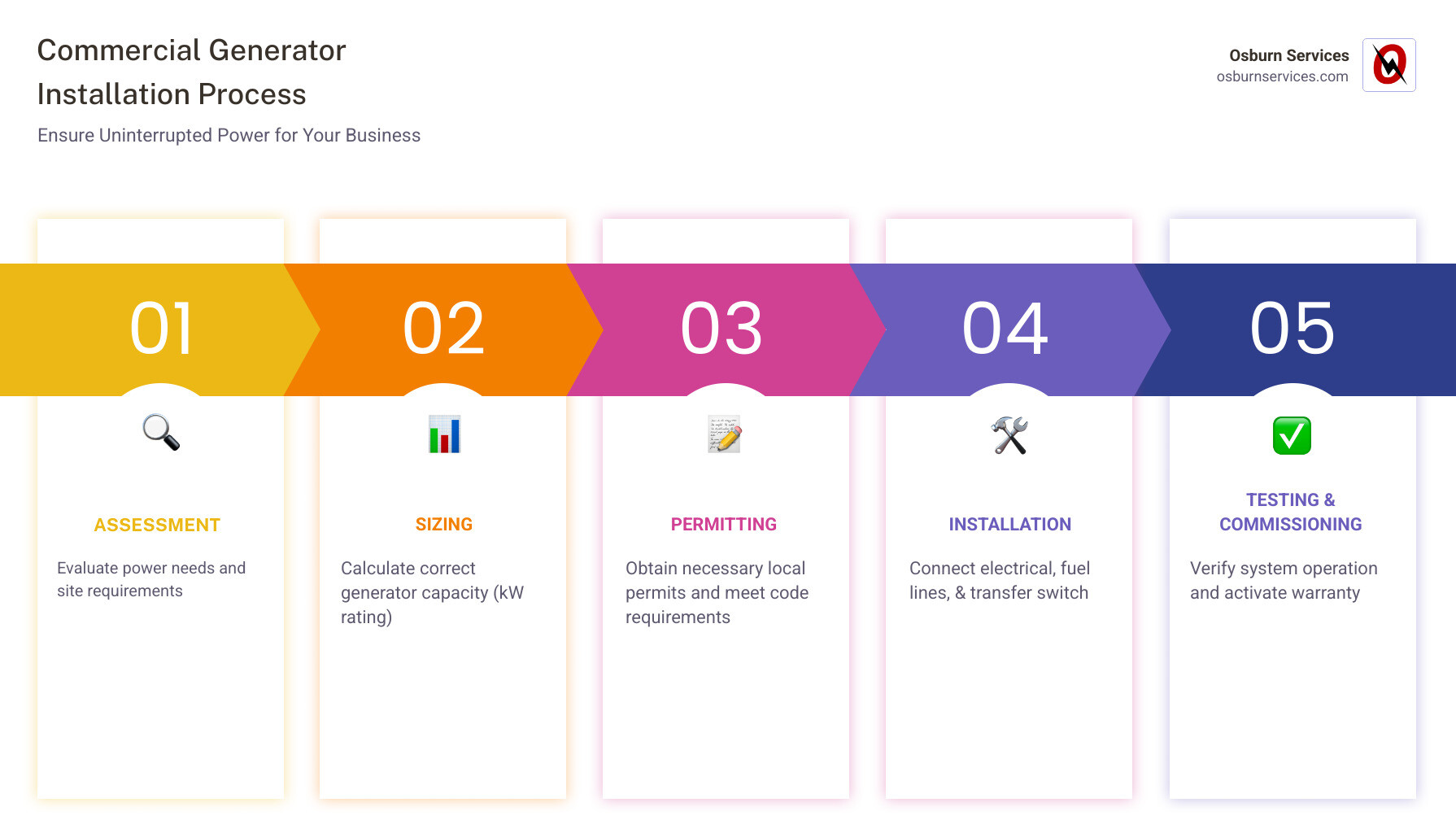
Key Steps in a Commercial Generator Installation:
- Assessment - Evaluate your power needs and site requirements
- Sizing - Calculate the correct generator capacity (kW rating)
- Permitting - Obtain necessary local permits and meet code requirements
- Installation - Complete electrical connections, fuel lines, and transfer switch setup
- Testing & Commissioning - Verify system operation and activate warranty
Power outages at work mean lost money. For businesses across Michigan's Lower Peninsula, unexpected outages can halt production, spoil inventory, crash data systems, and send customers elsewhere. A hospital needs continuous power for life support. A data center can't afford a single minute of downtime. Even a small retail shop loses sales and customer trust when the lights go out.
The research shows that commercial generator installation costs vary widely—from thousands to hundreds of thousands of dollars—depending on your facility's size and power requirements. A small business might need 10-20 kW, while a large factory could require 500-1,000 kW or more. Lead times for large industrial units can stretch up to a year, making early planning essential.
This guide walks you through the entire process of installing a commercial generator system. You'll learn how to size your generator correctly, choose between fuel types, steer permits and regulations, understand the role of automatic transfer switches, and maintain your system for long-term reliability.
Why Your Business Needs Uninterrupted Power
For any business, big or small, an unexpected power outage isn't just an inconvenience—it's a direct hit to the bottom line. In Michigan, with our unpredictable weather, ensuring business continuity means having a reliable backup power solution in place. We've seen how a well-executed commercial generator install can be the difference between a minor hiccup and a major financial setback.
The primary reasons businesses invest in generator installation are clear: to protect revenue, maintain operational efficiency, and safeguard their reputation. A power outage at work is lost money, impacting everything from data protection to employee safety.
The High Cost of a Power Outage
Imagine a busy restaurant suddenly losing power during dinner rush, or a manufacturing plant halting production mid-shift. These scenarios illustrate the high cost of a power outage, which extends far beyond simply lost productivity.
- Lost Sales and Revenue: When the lights go out, so does your ability to serve customers, process transactions, or continue production. This directly translates to immediate lost revenue that can be difficult, if not impossible, to recover.
- Production Halts and Damaged Inventory: For manufacturing facilities, a sudden power loss can stop machinery, leading to production delays and potential damage to equipment or work-in-progress. Businesses relying on refrigeration, such as grocery stores or cold storage warehouses, face the risk of spoiled inventory, a devastating loss.
- IT System Failure and Data Loss: In our digital age, most businesses rely heavily on IT systems. An abrupt power failure can lead to data corruption, system crashes, and hours or even days of recovery time. This not only impacts productivity but can also compromise sensitive information.
- Security System Compromise: Power outages can disable security systems, leaving your business vulnerable to theft or other threats. Maintaining continuous power ensures your security measures remain active.
- Reputational Damage: Repeated disruptions due to power outages can erode customer trust and damage your business's reputation. Clients expect reliability, and consistent downtime suggests your business isn't prepared.
- Unsafe Conditions: Depending on your business, a power outage could create unsafe working conditions for employees or clients. This is especially true for facilities requiring specific environmental controls or continuous lighting.
The financial impact of these issues can quickly outweigh the initial investment in a generator. We understand that businesses cannot afford downtime, and that's why we offer robust Commercial Generators designed to keep you running.
Industries That Rely on Backup Power
While every business benefits from backup power, some industries have a critical need where a power outage could have severe consequences. These sectors often require specialized Emergency Generator Solutions.
- Healthcare Facilities: Hospitals, clinics, and nursing homes require uninterrupted power for life support systems, medical equipment, and patient safety.
- Data Centers: These facilities need continuous power to maintain servers, prevent data loss, and ensure uninterrupted online services.
- Manufacturing Plants: To avoid costly production halts, equipment damage, and delays, manufacturers rely on generators to keep their assembly lines moving.
- Retail Stores: Point-of-sale systems, lighting, and refrigeration are essential for retailers, making backup power crucial for maintaining sales and preserving perishable goods.
- Restaurants: Uninterrupted power is vital for cooking equipment, refrigeration, and customer comfort, preventing spoiled food and lost business.
- Cold Storage Warehouses: Protecting vast amounts of temperature-sensitive inventory makes a reliable generator an absolute necessity.
Long-Term ROI of a Generator Investment
Investing in a commercial generator install isn't just about avoiding losses; it's a strategic move that delivers significant long-term returns.
- Protecting Revenue Streams: By preventing downtime, your business continues to generate income, ensuring financial stability even during grid failures.
- Mitigating Risk: A generator acts as an insurance policy, protecting your assets, data, and operations from the unpredictable nature of power outages.
- Enhancing Property Value: A fully integrated backup power system adds tangible value to your commercial property, making it more attractive to potential buyers or tenants.
- Peace of Mind: Knowing your business is protected provides invaluable peace of mind, allowing you to focus on growth and innovation rather than worrying about the next power disruption.
The ROI isn't just financial; it's also about maintaining your reputation and operational resilience. For a deeper dive into how regular servicing contributes to these benefits, check out our insights on The ROI of Regular Cummins Generator Servicing: Long-Term Savings and Peace of Mind.
Choosing the Right Commercial Generator for Your Needs
Selecting the perfect commercial generator for your business involves more than just picking the biggest or cheapest option. It's a careful balance of sizing, fuel type, and power system considerations custom to your unique operational demands. Our goal is to help you steer these choices to ensure your investment truly serves your business. For a comprehensive overview, you might find our guide on How to Choose the Right Generator for Your Home or Business helpful.
Sizing Your Generator: A Critical First Step
One of the most critical aspects of any commercial generator install is accurate sizing. An undersized generator won't power your essential equipment, while an oversized one is an unnecessary expense.
- Load Calculation: This is where we shine! We perform a detailed load study to calculate your business's precise power requirements. This involves looking at past electric bills to identify peak usage and then assessing every piece of equipment you need to power during an outage. This could range from essential lighting and HVAC to specialized manufacturing machinery, data servers, and refrigeration units.
- Kilowatt (kW) Rating: Generators are rated in kilowatts (kW), representing their power output. A small or medium-sized business might require a generator that can put out 10 to 20 kW, while a large facility could require 500 to 1,000 kW or even more. The goal is to match the generator's kW rating to your calculated load.
- Critical Systems vs. Full Facility Power: You'll need to decide if you want to power only mission-critical systems (e.g., security, emergency lighting, essential IT) or your entire facility. This decision significantly impacts the required generator size and overall cost.
- Future Expansion: We always recommend considering your business's future growth. Planning for potential expansion now can save you from costly upgrades down the road.
For a more detailed understanding of how we approach sizing, refer to our Residential and Commercial Generator Sizing: The Complete Guide.
Here's a list of common business equipment to include in a load calculation:
- HVAC systems (heating, ventilation, air conditioning)
- Lighting (emergency, general, exterior)
- Computers, servers, and network equipment
- Refrigeration and freezers
- Point-of-sale (POS) systems
- Manufacturing machinery and production lines
- Security systems (cameras, alarms, access control)
- Elevators and escalators
- Water pumps and sewage systems
- Communication systems (phones, internet)
Fuel Sources: Diesel, Natural Gas, and Propane
The choice of fuel source for your commercial generator has significant implications for cost, availability, maintenance, and storage. Each option has its pros and cons, and we'll help you determine the best fit for your Michigan business. Our article on Generator Fuel Options: Pros and Cons offers more detail.
| Fuel Type | Pros | Cons | Storage/Supply | Maintenance |
|---|---|---|---|---|
| Diesel | Reliable, readily available, less maintenance | Emissions, fuel degradation over time, requires on-site storage | Requires large, on-site fuel storage tanks, regular refueling | Less frequent, but fuel quality monitoring is crucial |
| Natural Gas | Continuous supply (utility line), cleaner burning, no on-site storage | More frequent maintenance, susceptible to gas line disruptions | Connects directly to existing utility gas lines, unlimited supply | More frequent engine maintenance |
| Propane | Cleaner burning than diesel, stable storage, portable | Limited supply (tank size), requires on-site storage tanks, less efficient | Requires on-site storage tanks (LP-vapor withdrawal systems), refueling | Similar to natural gas, but less prone to fuel issues |
- Fuel Storage Tanks: For diesel and propane generators, on-site fuel storage tanks are necessary. We'll assist with proper sizing and placement to comply with local regulations and ensure easy access for refueling.
- Utility Gas Lines: Natural gas generators offer the advantage of connecting directly to your existing utility gas line, providing a continuous fuel supply without the need for on-site storage. However, if the gas line itself is compromised during a widespread disaster, your generator could be affected.
Types of Commercial Generators and Power Systems
Commercial generators aren't one-size-fits-all. Understanding the different types helps us recommend the optimal system for your business.
- Standby Generators: These are the most common for commercial applications. Permanently installed and connected to your electrical system, they automatically detect a power outage and start up, providing seamless backup power. They are designed to run for extended periods.
- Emergency Power Supply Systems (EPSS): These are critical for facilities where power loss poses a significant risk. NFPA 110 standards categorize EPSS into different levels:
- Level 1 Systems: Required for situations where power loss could cause loss of life for employees or clients. These systems must provide power within 10 seconds of an outage. Think hospitals, emergency services, and certain manufacturing processes.
- Legally Required Emergency Standby Generators: These are also mandated by code but for situations less critical than Level 1. They must activate within 60 seconds of power loss.
- Additional Standby Backup Generators: These are not code-required but are chosen by businesses to power essential equipment for business continuity and to mitigate profit loss.
- Portable Commercial Units: While less common for continuous commercial backup, portable generators can be useful for temporary power needs, construction sites, or specific equipment. However, they are not designed to power an entire building during an extended outage.
We are proud to be authorized dealers for top brands like Cummins, known for their robust and reliable Cummins Commercial Generators.
The Commercial Generator Install Process: A Step-by-Step Guide
A commercial generator install is a complex project that requires meticulous planning, specialized electrical and mechanical expertise, and adherence to numerous regulations. Our experienced team in Michigan manages the entire process, ensuring a smooth and compliant installation from start to finish. This multi-stage process, from initial assessment to final testing, can take weeks or even months, depending on the complexity and lead times for equipment. For more details on our local services, visit Generator Installation Michigan.
Step 1: Site Assessment and Placement
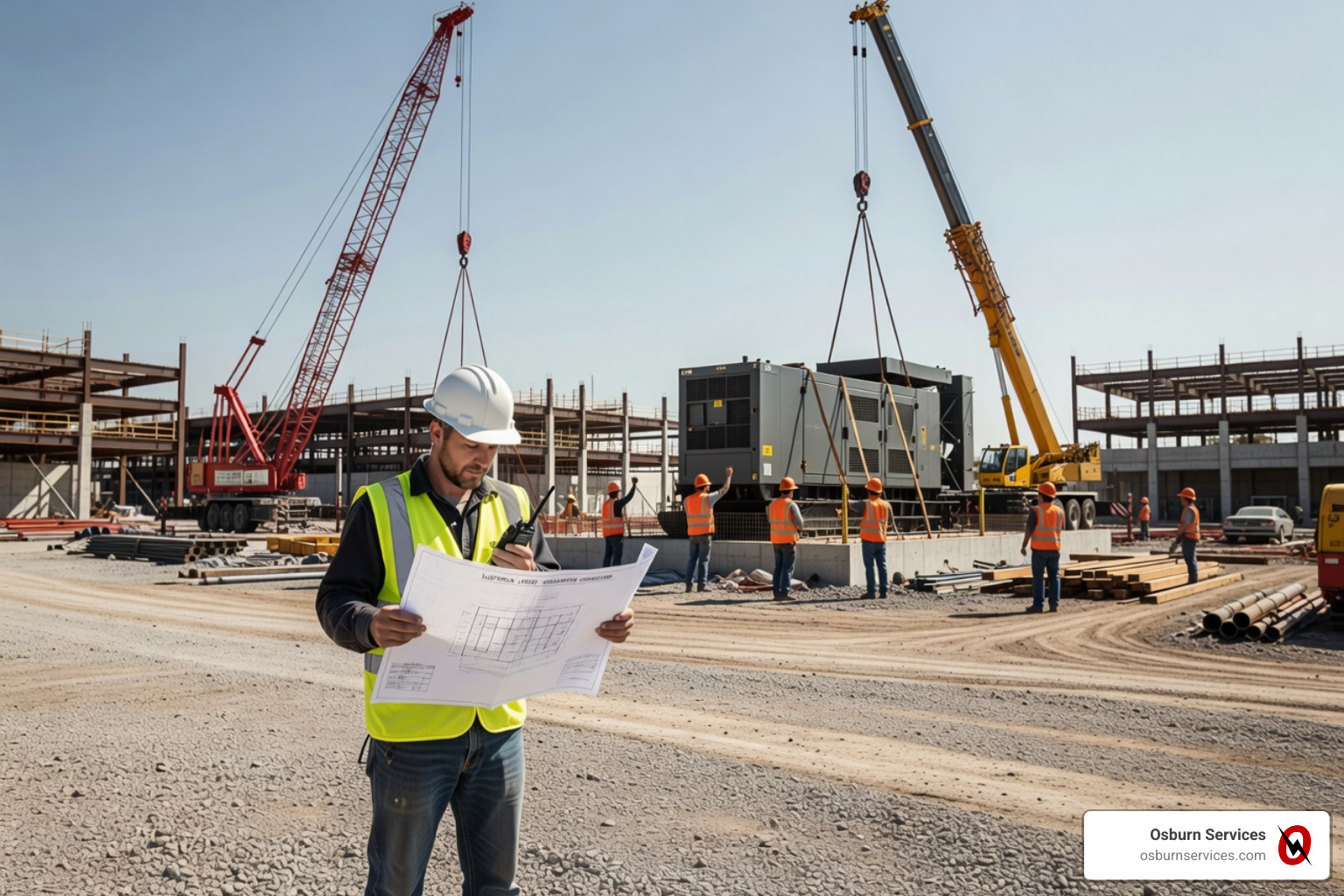
The first crucial step is a thorough site assessment to determine the optimal placement for your generator. This isn't just about finding an empty spot; it involves a detailed evaluation of your building's size, local climate, ventilation requirements, and existing infrastructure.
- Site Preparation: The generator requires a stable, level foundation, typically a concrete pad that is 4-5 inches thick and extends at least 6 inches beyond the generator's footprint. We'll ensure proper drainage and accessibility.
- Ventilation Requirements: Generators need adequate, unobstructed airflow for cooling and to safely vent exhaust fumes away from your building. We adhere to strict guidelines to prevent carbon monoxide buildup and ensure proper engine function.
- Noise Ordinances: Many Michigan communities have noise ordinances. We'll consider these regulations and discuss potential sound attenuation measures to minimize disruption to your business and neighbors.
- Proximity to Electrical Panels and Fuel Lines: Installing the generator closer to your existing electrical panels and fuel source (utility gas line or fuel storage tanks) can significantly reduce installation costs by minimizing the length of wiring and piping needed.
- Safe Trenching for conduit: Electrical wiring and fuel lines often run underground in protective conduit. Our team ensures safe and compliant trenching to connect the generator to your building's systems.
- Clearance Requirements: Generators must be installed with specific clearances—for example, at least 5 feet from any windows, doors, or soffit vents, and typically 18 inches from the back of the unit to a stationary wall. Overhead clearance and distance from combustible materials are also critical.
Step 2: Navigating Permits and Regulations
This is where our expertise truly shines. A professional commercial generator install ensures full compliance with all local, state, and national regulations. Permits are almost always required, and navigating the bureaucratic landscape can be daunting without experience.
- Local Building Codes: We'll ensure your installation meets all local building codes specific to your Michigan municipality.
- Electrical Permits: An electrical permit is mandatory for any generator installation, ensuring the work is performed safely and to code.
- Authority Having Jurisdiction (AHJ): We work directly with the Authority Having Jurisdiction (AHJ) – typically your local building department or electrical inspector – to ensure all requirements are met and inspections are passed.
- Emissions Standards: Depending on the generator size and fuel type, there may be specific emissions standards to adhere to. We'll help you understand and comply with these regulations.
Permit acquisition alone can take anywhere from one day to two weeks, depending on your location and the complexity of the project. We handle this entire process for you, from application to final approval.
Step 3: The Role of the Automatic Transfer Switch (ATS)
The automatic transfer switch (ATS) is the brain of your commercial generator system, ensuring a seamless transition from utility power to generator power and back.
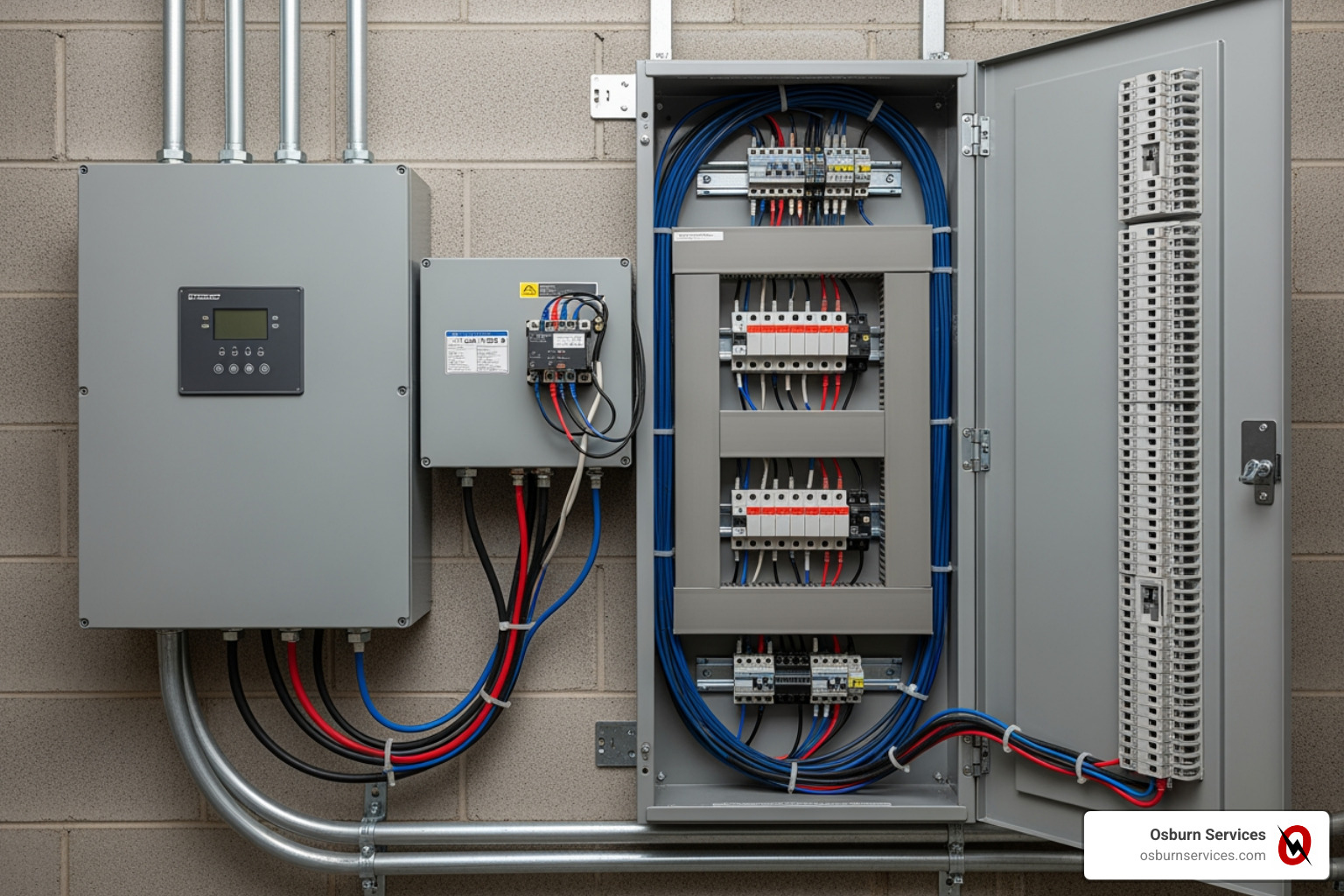
- Seamless Power Transfer: When a power outage occurs, the ATS automatically detects the loss of utility power. It then signals your generator to start, and once the generator is up to speed, the ATS safely transfers your building's electrical load from the utility grid to the generator.
- ATS Function: This automatic process typically takes less than a few minutes, often within seconds, minimizing disruption to your operations. When utility power is restored, the ATS senses it, transfers the load back to the utility, and signals the generator to cool down and shut off.
- Sizing the Switch: Just like the generator, the ATS must be correctly sized to handle your building's electrical load. It must be rated equal to or greater than your utility and generator breakers.
- Manual vs. Automatic: While manual transfer switches exist, they require a staff member to physically switch power sources, adding delay and labor. For commercial applications, an automatic transfer switch is almost always the preferred solution for its reliability and efficiency.
Understanding How Do I Determine the Right Transfer Switch for My Generator? is crucial for a complete system.
Step 4: Final Testing and Commissioning
Once the physical installation is complete, the final step is rigorous testing and commissioning to ensure your system is fully operational and ready to perform when needed.
- Load Bank Testing: We conduct load bank testing, which simulates your business's full electrical load to verify the generator's performance under stress. This ensures it can handle the maximum power demand without issues.
- Verifying Voltage and Frequency: Our technicians carefully check the generator's output voltage (e.g., 238-242 VAC) and frequency (e.g., 59.5-60.5 Hertz) to ensure it meets specifications and will safely power your sensitive equipment.
- Simulating a Power Outage: We simulate a power outage to confirm that the automatic transfer switch functions correctly, the generator starts reliably, and power is transferred seamlessly to your facility.
- System Calibration: Any necessary adjustments are made to optimize the generator's performance and ensure all components are working in harmony.
- Warranty Activation: The warranty for your new commercial generator officially begins at the commissioning and startup phase. We'll ensure all documentation is properly filed.
A complete commercial generator install isn't finished until we've thoroughly tested and commissioned your system, providing you with confidence and peace of mind.
Post-Installation: Costs, Maintenance, and Professional Care
After your commercial generator install is complete, our commitment to your business continues. Understanding the total cost of ownership, implementing a robust maintenance plan, and relying on professional services are key to long-term reliability and getting the most out of your investment. We offer comprehensive Generator Services Michigan wide, ensuring your generator is always ready.
Understanding the Cost of a Commercial Generator Installation
The cost associated with a commercial generator install can vary widely, from thousands to hundreds of thousands of dollars. This variability is due to several factors:
- Unit Price: The generator unit itself is a significant cost, directly related to its size (kW rating), brand, and fuel type. Larger, more powerful units naturally cost more.
- Installation Labor: This includes the expertise of electricians, plumbers (for gas lines), and general contractors for site preparation. Complex installations require more labor.
- Sizing Complexity: A more complex load calculation for a large facility with diverse power needs can add to initial planning costs.
- Site Preparation: This can include pouring a concrete pad, trenching for electrical conduit and fuel lines, and potentially crane rental for heavy units. The further the generator is from your building, the more conduit and wiring are needed, increasing costs.
- Permit Fees: Local permits and inspections come with associated fees, which vary by municipality.
- Fuel Line Costs: The cost of running new gas lines or installing fuel storage tanks for diesel or propane will factor into the total.
We believe in transparency. That's why we offer a Free Generator Estimate to help you understand the potential investment for your specific business needs.
Ongoing Generator Maintenance for Peak Performance
A regularly serviced generator can last a long time, performing reliably for years. Conversely, neglecting maintenance is a recipe for disaster, as batteries can fail, coolant can leak, or air can get into fuel lines. Regular maintenance is critical to ensure your generator is ready when needed.
Here’s a list of essential maintenance tasks:
- Weekly Self-Tests: Most commercial generators have an automatic exercise function, running a self-test weekly or bi-weekly. This ensures the unit starts and runs properly.
- Annual Comprehensive Service: We recommend a comprehensive service at least once a year. This typically includes:
- Oil and filter changes (engine oil, oil filter, air filter)
- Spark plug replacement (for gas units)
- Valve lash adjustment
- Fuel system inspection and cleaning
- Coolant level check and top-up
- General visual inspection of all components
- Battery Health: The battery is crucial for starting. Regular checks ensure it's charged and in good condition.
- Keeping Your Warranty Valid: Adhering to the manufacturer's recommended maintenance schedule is essential for keeping your generator's warranty valid.
Our Commercial Generator Maintenance plans are designed to keep your system in peak condition, ensuring it’s always ready to provide power when you need it most.
The Value of Professional Generator Services
While the thought of a DIY approach might cross your mind, a commercial generator install is unequivocally not a DIY project. It involves complex electrical and fuel connections that must comply with stringent safety and building codes.
- Safety and Compliance: Our licensed and certified technicians ensure your installation meets all local, state, and national codes (like NEC and NFPA standards). This prevents dangerous backfeed, fire hazards, and carbon monoxide risks. A poorly executed installation is not worth the risk and can lead to higher costs in the long run.
- Technical Expertise: From precise load calculations and fuel system design to electrical integration and ATS programming, our team possesses the specialized knowledge required for a flawless installation.
- Correct Sizing and Installation: We guarantee your generator is perfectly sized for your needs and installed correctly the first time, preventing issues and ensuring long-term reliability.
- Warranty Support: Professional installation ensures your manufacturer's warranty remains intact and we can facilitate any warranty-related services.
- 24/7 Emergency Service: Should an issue arise, our Michigan-based team offers 24/7 emergency support, ensuring rapid response and minimal downtime.
Choosing professional services is an investment in safety, reliability, and peace of mind. Learn more about Unleashing Power & Reliability: The Benefits of Professional Generator Installation with Osburn Services.
Frequently Asked Questions about Commercial Generator Installation
How long does a commercial generator installation take?
The process can take weeks or even months, factoring in consultation, sizing, equipment lead times (which can be up to a year for large units), permitting, and the physical installation itself. While the actual physical installation might be completed in a few days, the entire journey from decision to ready-to-run can be extensive.
What size generator does my business need?
Generator size depends entirely on the electrical loads you need to power. A professional assessment is required to calculate the total wattage of critical systems (like servers, lights, and refrigeration) or your entire facility to determine the correct kilowatt (kW) rating. For smaller businesses, generators might range from 10 to 20 kW, while large facilities could require 500 to 1,000 kW or more.
How often does a commercial generator need to be serviced?
Most manufacturers recommend a comprehensive service at least once a year. Additionally, the generator should run a self-test weekly or bi-weekly to ensure operational readiness. Facilities with critical power needs, like hospitals, may have more stringent maintenance schedules and perform more frequent checks.
Secure Your Business's Future with a Reliable Power Solution
A professional commercial generator install is more than a purchase; it's a strategic investment in your business's resilience and continuity. By carefully selecting, sizing, and maintaining your system, you ensure that a power outage is a minor inconvenience, not a major disaster. For businesses across Michigan's Lower Peninsula, Osburn Services provides the expertise to steer this entire process, from initial assessment to long-term maintenance. Start planning for uninterrupted power today.
Ready to determine your power needs? Use our Generator Size Calculator to get a preliminary estimate and take the first step toward securing your business.

Service Area
Contact
